

I’d like to tell you about a phone call I received when I was fourteen years old.
It was 1976. I was a freshman at Germantown High in Memphis, Tennessee. Two weeks into two-a-day football practices in the kind of August heat that makes you question every choice you have ever made. I was seriously thinking about quitting the team. Money, concerts, girls — all of it felt more real and more immediate than another afternoon in the sun. Then Coach called.
He didn’t lecture me over the phone. He didn’t remind me what I owed the team. He simply asked if he could come by and talk — just thirty minutes, he said. Something in his voice made it hard to say no.
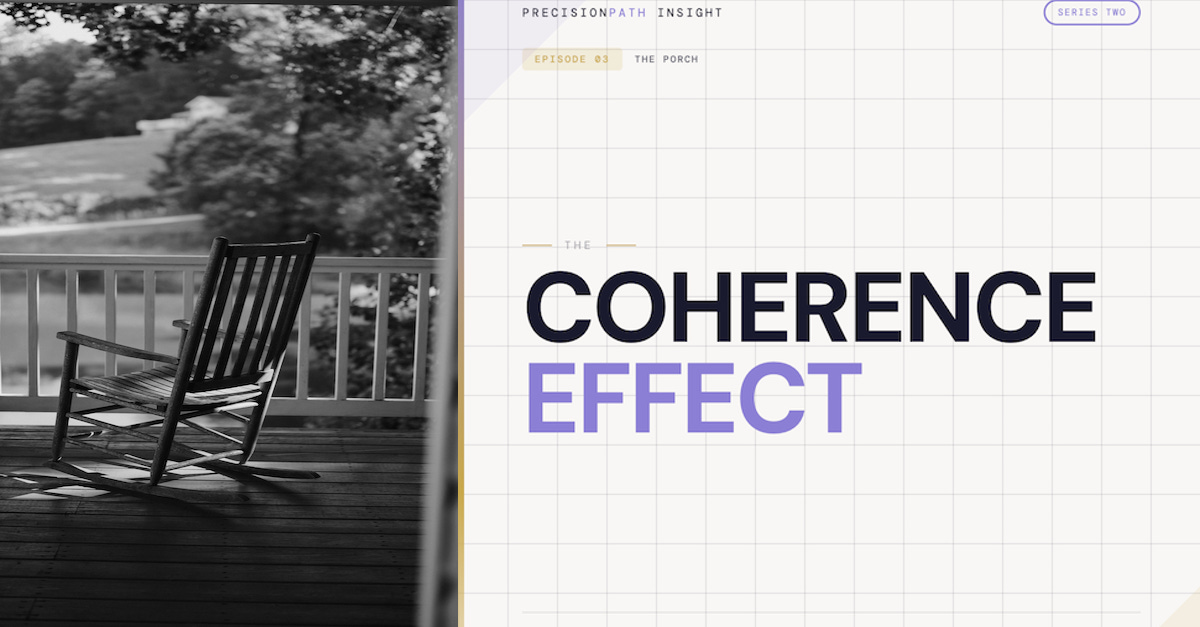
A little while later, there he was on my front porch. A grown man, a coach, sitting with a fourteen-year-old kid who had other things on his mind. For thirty minutes, he asked questions and listened. And then, without drama, he helped me see something I hadn’t fully considered: that the choices we make when we’re young have a way of following us.
He wasn’t there to save his roster. He was there for me.
I have sat through leadership seminars, read the books, and worked alongside some genuinely talented executives in the fifty years since that evening. But the clearest picture I have ever had of what a leader should be was formed on a front porch in Memphis — by a man who never once seemed to think he was doing anything extraordinary.
Here is what that season taught me about what real leadership actually looks like.
On the very first day of practice, Coach didn’t say a word about winning.
No talk of championships. No speech about records. He stood before a group of boys from entirely different backgrounds — different neighborhoods, different families, different everything — and told us what he was actually there to do.
He was going to turn us into a team of young men.
That was his mission. And it was more noble than any trophy.
Most leaders spend enormous energy communicating strategy and almost none communicating what they are actually there for. Those are different conversations. The second one is the one people remember.
Declaring a mission is one thing. The harder test is what you do when someone inside the team threatens it.
We were in the third quarter against the strongest team in our conference when our star quarterback lost his composure.
He started screaming at the offensive line right there on the field. The crowd could see it. For a second, it felt like everything might unravel.
Coach called timeout. Walked calmly onto the field. And pulled him out of the game. The booing started almost immediately.
But Coach understood something the crowd didn’t: without mutual respect, a team isn’t a team at all. There was no room for superstars at the expense of the people around them.
When the quarterback came back into the game, something had shifted. Before every huddle for the rest of that season, he made a point of thanking the line for protecting him. Every time. Without fail.
Doing the right thing when the crowd is booing is not a personality trait. It is a practice. And like most practices, it is built in small moments before the big ones arrive.
Pulling your best player when the crowd is booing takes nerve. Walking into a losing locker room at halftime and asking your team what they would do differently takes humility.
I remember a game that wasn’t going well later in the season.
At halftime, instead of delivering a fiery speech or drawing up a new scheme, Coach did something that stopped us all cold.
He asked us what we would do differently in the second half.
And he meant it. He listened — not politely, not while waiting for his turn to talk, but sincerely. He heard us. Then he adjusted accordingly.
We went back out and won the game.
The rarest quality in any leader is not intelligence or vision or decisiveness. It is the humility to seek counsel from the people doing the work, and the wisdom to act on what they tell you. Most leaders consult. Very few listen. Coach did something different — he trusted that the people closest to the problem knew something he didn’t.
They usually do.
After every game we won, Coach quietly stepped aside.
No postgame speeches positioning himself at the center of the story. No interviews about his strategy. He understood that a leader’s job in victory is to get out of the way.
But it was the one game we lost that revealed his true character.
After the final whistle, he gathered us, asked us to congratulate the other team, and sent us back to the locker room. Then he stood out on that field — alone — for an hour. The press came. The frustrated fans came. The second-guessers and the critics came.
He stood there and took all of it. Every bit of it. So that we didn’t have to.
We never knew, in the moment, exactly what he was doing. But we felt it. There is something that happens to a team when they realize their leader will stand between them and the storm.
It doesn’t make them soft. It makes them loyal in a way that no pep talk or motivational poster ever could.
I have been carrying that image — a man alone on a field — for fifty years. And I keep returning to it because I keep watching its contrast play out in boardrooms.
A man standing alone on a field after a loss — with a different kind of leader.
Not a high school football coach. Someone who showed up in a Gulfstream. Who showed up in a board meeting. Who showed up in a carefully worded memo to employees that began with the words I take full responsibility for the decisions that led us here.
And then left — with the money.
You know the names. The CEOs who presided over collapses measured in billions, in layoffs, in destroyed livelihoods — and walked away with compensation that made the damage they caused look arithmetically surreal. The language is always the same: restructuring, right-sizing, difficult macroeconomic environment. Each phrase performs the same function: it removes human agency from the narrative. Nobody decided to do this. It happened.
Coach didn’t issue a statement after that loss. He stood on the field. In public. For an hour. And took it.
That is the difference. Not a memo or a carefully worded apology. Presence, visibility, and accountability. The willingness to take the hit on behalf of the people you lead. That is the job.
I want to be careful here. Because this is not a story about corporate villains. The executives I have described were not all bad people. Many were talented. Some genuinely believed they were doing the right thing.
Here is what I have learned watching good leaders slowly become bad ones: accountability doesn’t fail all at once. It erodes. Quietly. One small choice at a time. One decision hoarded instead of delegated. One hard conversation avoided. One loss where you wrote the memo instead of standing on the field.
The distance between Coach and the executives I just described is not a distance of character. It is a distance of accumulated choices.
I stayed on the team.
Looking back across fifty years, I realize that what Coach gave us that season wasn’t a set of football strategies, a magic playbook or a management framework. It was a living example. He didn’t talk about integrity. He practiced it, quietly, in moments when no one was grading him and nothing was guaranteed.
He sat on a porch with a kid who was about to quit. He pulled a star player out of a game when the crowd was booing. He asked his team what they would do differently at halftime. He stood alone on a field for an hour after a loss. He stepped aside after every win.
None of those moments made the headlines. None of them showed up on a performance review.
They were just choices. Made consistently, in the small moments that nobody was watching.
And fifty years later, I am still talking about them.
The people who work for you are making the same assessment about you right now. Not based on what you say in all-hands meetings. Based on what you do in the small moments.
When your high performer starts going quiet — do you notice? Do you show up?
When the decision needs to be made and it’s hard and the crowd is booing — do you have the courage to make it anyway?
When the project fails — do you stand on that field, or do you write the memo?
You don’t have to be perfect. Coach wasn’t perfect either. He was just consistent.
That consistency, over one season, produced bonds that lasted fifty years.
Imagine what it could produce in your organization over the next five.
Next issue: I want to tell you about the most expensive thing I’ve ever watched a room full of senior executives do.
They built a very good presentation.
And in doing so, they lost the one thing the people across the table had flown from Tokyo to find.
The Coherence Effect — Series Guide
Phase One — Human Foundation
1. You Already Know This. You Just Haven’t Named It Yet.
2. The Piano Man
3. The Porch
4. No Deck Required
5. Why I Built This
Phase Two — The Framework
6. Your Diagnosis Is Probably Wrong
7. Your Organization Isn’t Broken. It’s Incoherent.
Phase Three — The Case Studies
8. Type I: Intent Subordination — The Boeing Story
9. Type I: The Circuit Nobody Dropped
10. Type II: Dimension Collapse — The Peloton Story
11. Type III: Capability Inversion — The Haribo Story
12. Types VI & VIII: The $42M That Was Never Missing
13. Type IV: We Don’t Do That
14. Type V: Authority Diffusion
15. Type VII: Structural Theater
Phase Four — Series Close
16. What Comes After the Diagnosis
PrecisionPath Consulting works with mid-market leadership teams who know something is wrong but can’t locate exactly where. The OCI Diagnostic identifies which of the eight coherence failure modes are costing your organization performance — and what to do about it.
Kent Hallmann is the founder of PrecisionPath Consulting. Thirty-five years diagnosing organizational friction at Deloitte, KPMG, Wipro, and SAP. Fixed fee. Defined scope. Senior practitioner on every engagement — no handoffs, no substitutes.
The Coherence Problem research: Zenodo https://doi.org/10.5281/zenodo.19456590 · SSRN http://ssrn.com/abstract=6479301